Polidicks: Advertising

Very broadly speaking, there are two types of advertising: Informational and aspirational. When advertising is purely informational (rare!), it rarely grates, when it is aspirational I find it the most insulting shit ever.
Informational advertising tells you what someone wants you to know about the subject of the advertising. From the simplest text-only ad
New Sun-Dried Tomato Snickers, Out Now!
to something that is features aspiration but wants to create awareness of a specific product or service
Ginny, the hottest starlet on Gooning With The Gardenians, has a new line of eco-friendly mouth restraints: Green Gaggers
the idea is that if you know about the thing, the wanting will begin.
Aspirational advertising uses all its power to tell a story. It paints a picture of a life you might aspire to and associates it with buying a thing so that you fulfill your aspirations by spending money with a multinational corporation.
Do you want to walk on the beach, hand-in-hand with your spouse and children, smiling while wearing the most beige wardrobe you’ve ever seen? Well, you better start taking Monjempic, you fat fuck. Tell your doctor anything you think of to get a prescription.
Historically, aspirational advertising was reserved for products that didn’t have any real specific benefit to customers other than making them “feel good”. Coca-Cola, Marlboro, Starbucks, Doritos—these all provide varying levels of downside if consumed regularly (up to and including death)—so they had to be sold as a thing that made you “feel good”, because that was the one true thing about them. It’s ironic that when they each came out with a less fun but theoretically less harmful version (sugar free, low tar, baked-not-fried, dairy-free) they started bragging about how it was better for you than the version you wanted, then sold the new thing based on that comparison, knowing that most of us would still buy the thing that tasted better. Why does anyone smoke filtered cigarettes? They prefer dying slowly to dying less slowly?[1]
I am comfortable with purely informational advertising. In fact I seek it out and even subscribe to newsletters that essentially do this. Send me a listing of upcoming concerts or movies or comics. I want the information. My own newsletter SUBSCRIBE NOW! that is mostly reviews is essentially advertising for comics you could buy or artists you could pay attention to.
Post-WWII, so many more Americans started going to college that advertising only to dumb people was a separate market
Snake Oil Supplements will give you better and more hard-ons without a prescription!
and advertisers needed to add a layer of irony.
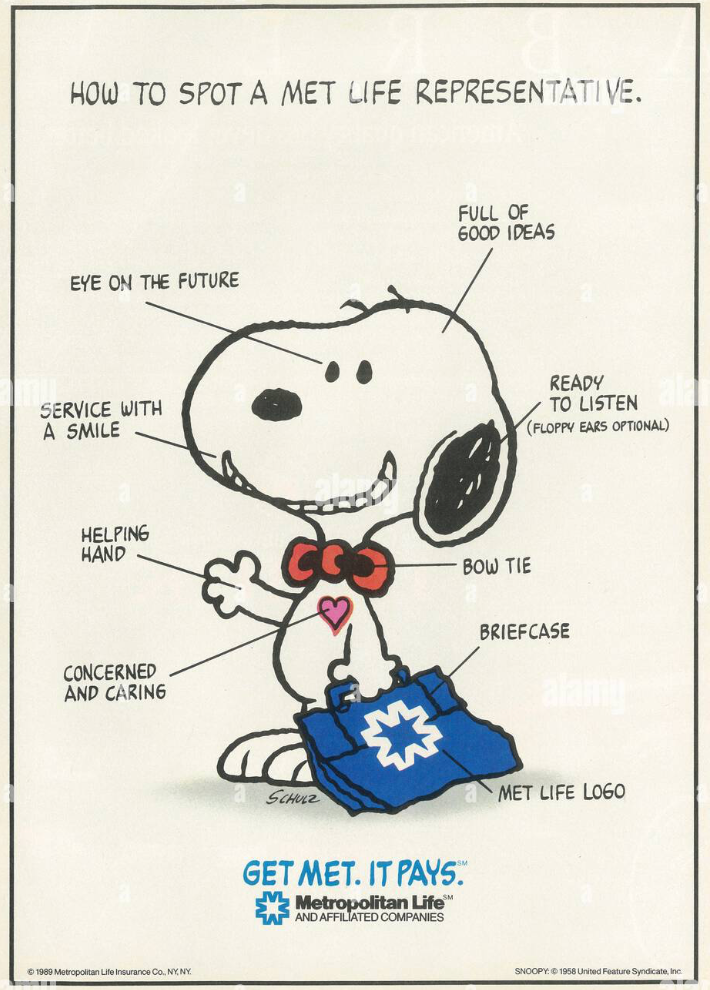
Charlie Brown and Snoopy are funny. You know what’s not fun? Dying of a heart attack at 50 and your family living in the streets because you’re not there to provide for them. Buy our life insurance!
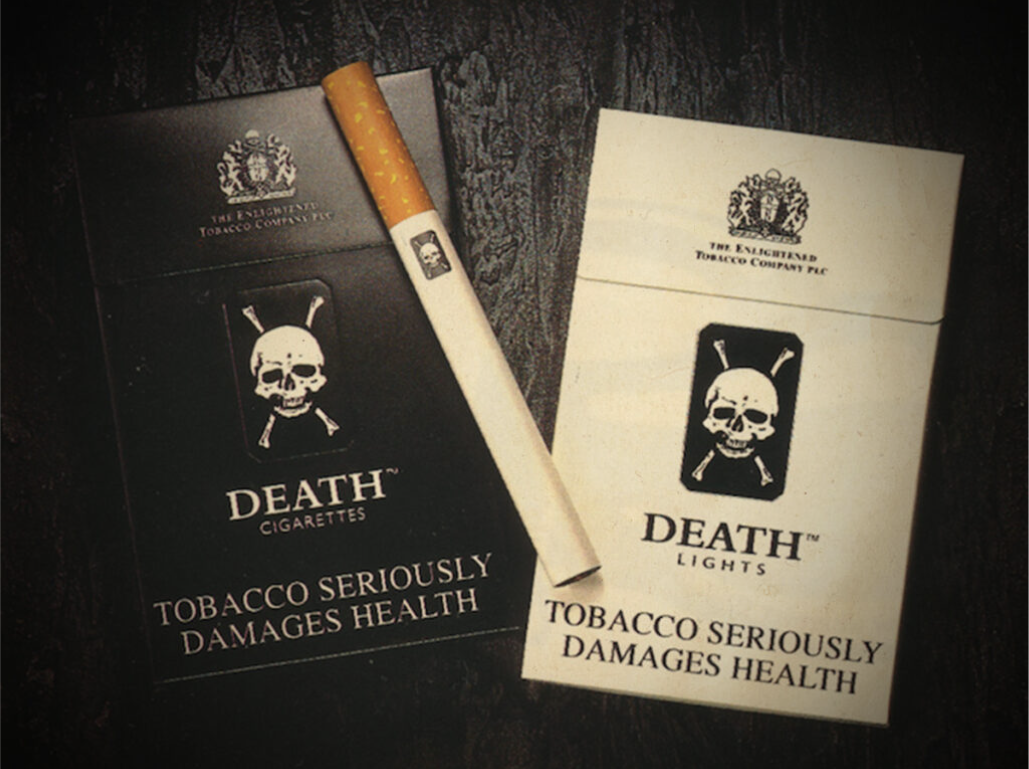
Then advertisers recognized that telling people not to buy something worked too. Many people have credited the D.A.R.E. program with inspiring them to try drugs. And in Europe they put what was intended to be terrifying warnings in large bold type on cigarettes, so a brand embraced the advertising. Now a mostly harmless company (canned water) advertises as though its product is harmful, simply to sell expensive cans of water with bubbles or a little sugar added.
Eventually, thanks to advertising being everywhere (billboards and print ads being the precursor to Vizio putting an ad on the screen when you turn on the tv and online media that has more ads per minute than broadcast television) we’ve lost context for what is and is not being sold to us. My cynical heart has started to assume that there is not a single thing on the internet, for example, that isn’t selling something. When all you need is money, everything looks like an ad.
SUBSCRIBE BUTTON HERE
See what I mean?
Today I was listening to a podcast in headphones with an ad read by the host. I could not tell you what the ad was for, and my hands were full, so I didn’t grab my phone and skip it, but a phrase jumped out to me as being 100% bullshit. There are phrases that free trade (lol) laws allow because it has been determined that they don’t mean anything other than: Our thing good; buy our thing.
The most obvious is “best” or its related terms “greatest,” “coolest,” “top,” “favorite,” etc. I can’t advertise that my newsletter is the “most popular” or “most successful” without providing an external (also bullshit) source for the claim (“J.D. Power rated…”) but I can say it’s the BEST! without having anything to back it up.
I am hyper-aware of advertising and its pitfalls and tricks, and I am not alone. There are some who take it to logical extremes, and satire of advertising has been around for a long time, but just as placebos can still work even when we know they are placebos, when I see an ad for something I already like, I want the thing in the ad. So a billboard for a Filet o’ Fish makes me think, hmmm, maybe I want a Filet o’ Fish right now. In fact, I must be hungry, because I just typed a goddammed brand name twice in my free newsletter. Ugh.[2]
By now, you might be wondering why I’ve classified this short essay under my occasionally used title “Polidicks” and here you go: The ad I heard, full of adspeak, sounded exactly like any number of politicians. They both use words that don’t mean anything tangible anymore (woke, fascist, meritocracy, free market), exaggerations that aren’t believable (keep you safe, help the economy, bring back jobs) and a blithe disregard for past behavior or future needs.
I have lamented people becoming inured to terrible things happening because I myself have become inured to terrible news stories. It’s the reason that “Can you believe it’s only been three months since…” has become such a hack joke. It’s true, and none of us can believe it, no matter how your politics fall.
So modern politics, exemplified by many people and with a president[3] that is the pinnacle of this modern illness, is now a cross between reality tv and aspirational advertising and I can no longer tell the difference. Everyone is selling me something and I don’t want to buy any of it.
I watched a minute of a recent Sean Penn interview where he said he’d never stop smoking, even as he reckoned with the likely disease it brought. This is how I feel about sugar and salt and fat. I eat less of it than ever, but I won’t quit. ↩︎
Here’s one place where the-thing-looks-and-sounds-better-in-the-ad-than-if-you-went-and-bought-the-thing-right-now advertising both works very well and fails for me every time: when I go to the movies. I will sometimes buy a soda and snacks and sometimes not. When I do buy a soda, I will, without question, have already bought it when I sit down in the theater. Then the ad comes on (especially the perfectly crafted one where the ice clinks and the bubbles fizz by the company that used to put cocaine in it) and I think, that looks delicious. I am occasionally sitting with my hand near a paper cup loaded with ice from an ice maker that was last cleaned in March by a teenager who has never once done the dishes at home and with a drink with corn syrup bitterant at best, and fake sugar at worst. I will not be heading back out to the lobby to get myself a drink, but that’s not the point of the ad anyway. The point is that when anyone says “soda,” 80% of the planet thinks of that brand first. ↩︎
And for any both-sidesers and what-abouters, fuck every single politician for wrapping their ambition in an American flag and calling it public service. ↩︎